
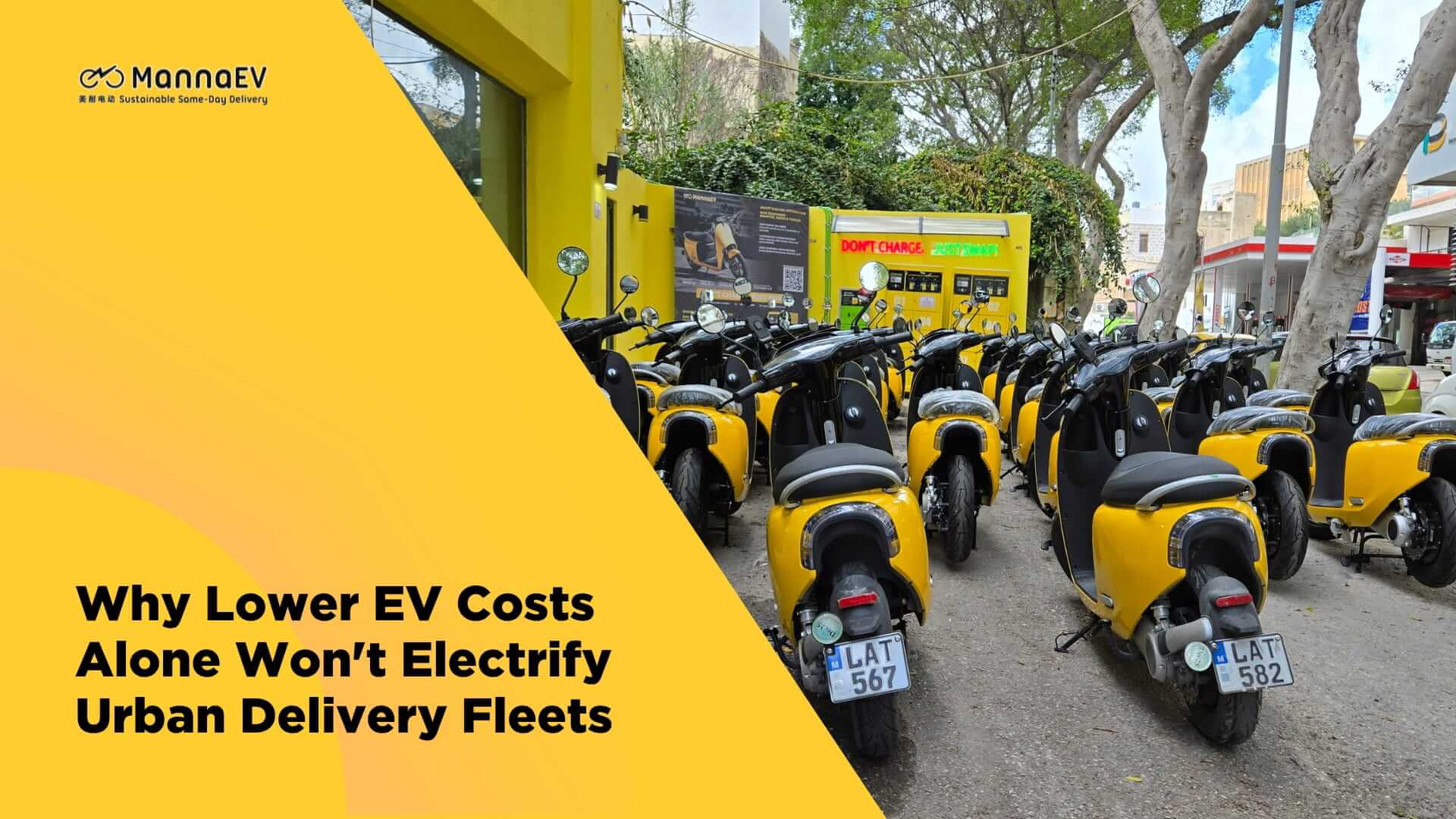
For years, governments and businesses have focused on one common goal: making electric vehicles more affordable. Purchase incentives, tax credits, and operating cost savings have all been promoted as ways to accelerate fleet electrification.
Lower costs certainly help, but are they enough?
A recent study published in Transportation Research Part D suggests the answer is no. The research found that while electric vehicles (EVs) generally offer lower operating costs, the biggest challenge for commercial fleet adoption isn’t simply vehicle price. Instead, it is operational efficiency, specifically how far vehicles can travel and how effectively they can complete daily delivery routes.
The Real Challenge Is Keeping Vehicles Moving

For delivery businesses, every vehicle is a revenue-generating asset. The longer a vehicle spends off the road, the fewer deliveries it completes.
This is why fleet operators don’t evaluate EVs based solely on purchase price or energy costs. They evaluate them based on whether the vehicle can complete an entire day’s work without disrupting operations.
The study found that even when EVs are significantly cheaper to operate than conventional vehicles, logistics companies often continue using a combination of electric and fuel-powered vehicles because today’s battery limitations can make route planning less efficient. In many cases, simply lowering EV costs or increasing subsidies is not enough to achieve full fleet electrification.
Fleet Electrification Is an Operational Challenge
Electrifying a fleet isn’t simply about replacing one vehicle with another.
Every fleet manager must answer practical questions:
- Can vehicles complete their assigned routes?
- How much downtime is required for energy replenishment?
- Will drivers still meet delivery schedules?
- Can fleet utilisation remain high throughout the day?
These operational considerations ultimately determine whether an electric fleet is commercially viable.
The research also highlights that delivery networks originally designed around conventional vehicles may require operational changes before full electrification becomes practical. Simply adding more EVs without addressing infrastructure and operational workflows may limit the benefits businesses hope to achieve.
Why Energy Infrastructure Matters
When discussing fleet electrification, conversations often focus on vehicles.
In reality, energy infrastructure can be just as important.
A delivery vehicle that spends extended periods charging is unavailable for deliveries. For businesses operating on tight schedules, that lost time directly affects productivity and revenue.
This is where battery swapping introduces a different approach.
Instead of waiting for batteries to recharge, vehicles can return to service within minutes after a battery swap. By minimising downtime, battery swapping allows fleet operators to maintain higher vehicle utilisation while continuing to transition toward electric mobility.
Rather than asking drivers to adapt their operations around charging, battery swapping helps energy adapt to fleet operations.
Every City Requires a Different Strategy
One of the most interesting findings from the research is that geography matters.
Dense urban environments with shorter delivery routes are naturally more suitable for full fleet electrification, while larger service regions require greater vehicle range or different operational strategies before an all-electric fleet becomes economically viable.
This reinforces an important lesson for fleet operators:
There is no one-size-fits-all approach to electrification.
Successful fleet transitions require solutions that match local operating conditions, delivery patterns, infrastructure availability, and business objectives.
Looking Beyond Vehicle Costs
As battery technology continues to improve, electric vehicles will undoubtedly become capable of serving more delivery operations.
However, businesses that want to electrify successfully should evaluate more than just vehicle pricing.
They should also consider:
- Vehicle utilisation
- Energy replenishment time
- Route efficiency
- Infrastructure availability
- Overall operational productivity
Fleet electrification is not simply a purchasing decision, it’s an operational transformation.
Companies that succeed will be those that build an ecosystem capable of keeping vehicles moving efficiently, every day. That means combining the right vehicles with the right energy infrastructure, so electric fleets can deliver not only lower emissions, but also reliable, productive operations.
🚀 Let’s Deliver Success Together
Partner with MannaEV today and make your deliveries smarter, greener, and more convenient. 📦 Plan ahead, deliver on time, and keep your customers smiling every single day.
🔗 MannaEV Delivery Apps (Android & iOS): https://onelink.to/6ppk4n
🌍 Website: https://mannaev.com/
For inquiries, feel free to reach out:
📱 WhatsApp: +356 7962 4080
📧 Email: support@mannaev.com
Leave a Reply