
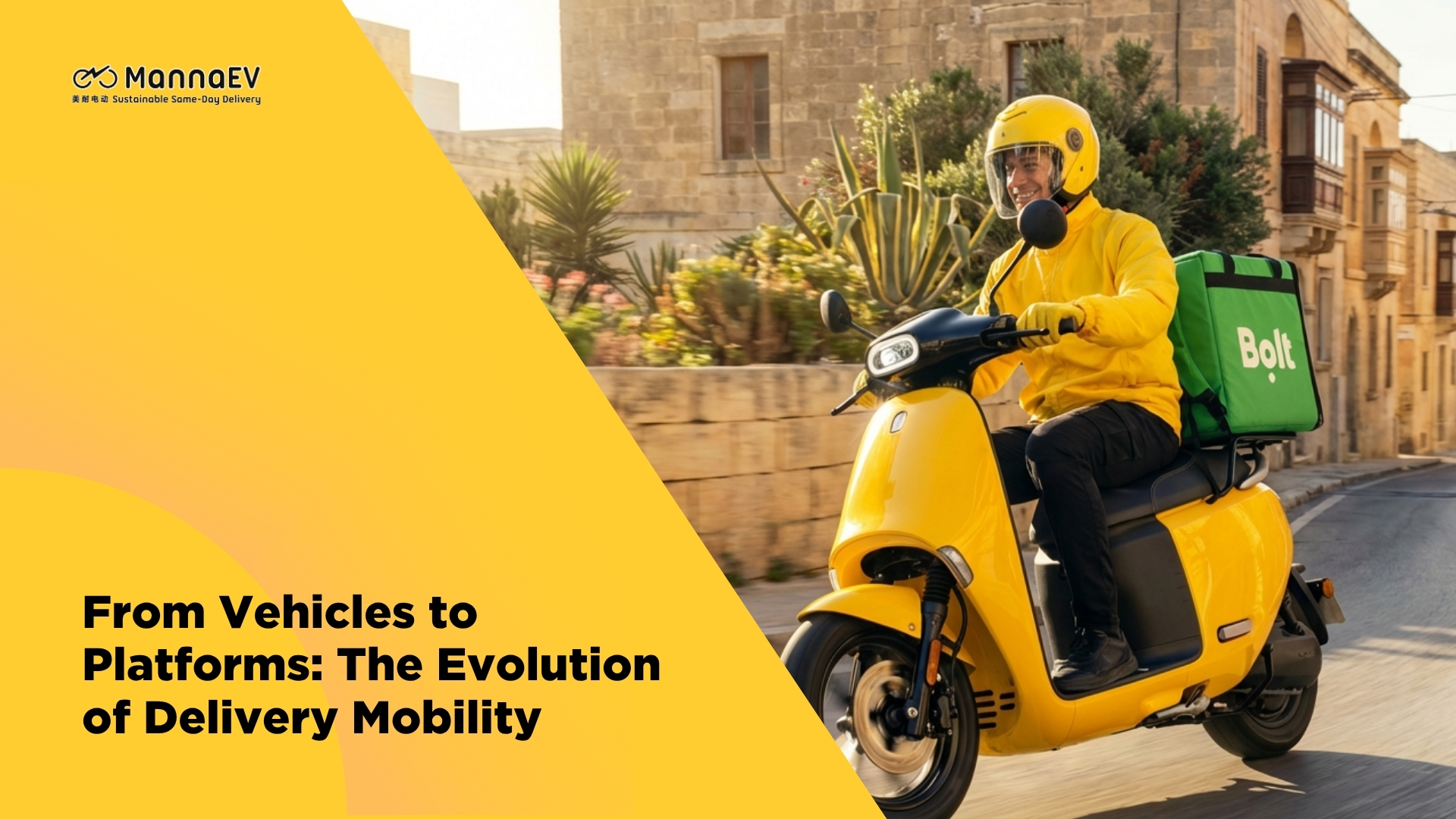
For years, the delivery industry was built around a simple idea: get the right vehicle, put a rider behind the wheel, and move goods from one place to another.
But as cities become busier, customer expectations rise, and delivery volumes continue to grow, that model is changing.
Today, successful delivery operations are no longer defined only by the vehicle on the road. They depend on the entire system behind every delivery, from energy and vehicle availability to fleet management, rider productivity, data and operational efficiency.
The industry is moving from vehicles to platforms.
The Vehicle Was Only the Beginning
Traditional delivery mobility has always been heavily dependent on vehicles.
A motorcycle, van or car provides the physical means to complete a delivery. But the vehicle itself is only one part of the equation.
A delivery fleet also needs to answer questions such as:
- Is the vehicle available when the rider needs it?
- How much does it cost to operate every day?
- How quickly can it be recharged or refuelled?
- How efficiently are riders using their time?
- Where are vehicles operating?
- How can downtime be reduced?
- How can fleet operators manage dozens or hundreds of vehicles more efficiently?
As delivery businesses scale, these questions become just as important as the vehicle itself.
This is where mobility begins to evolve from a hardware problem into a systems problem.
From Vehicles to Connected Mobility
The next stage of delivery mobility is about connecting different parts of the operation.
Instead of treating the vehicle as a standalone asset, modern mobility solutions can bring together:
Vehicles + Energy + Riders + Infrastructure + Data + Operations
When these components work together, the goal is no longer simply to provide transportation.
The goal is to create a more reliable and efficient delivery ecosystem.
For example, an electric delivery vehicle can offer lower operating costs and a quieter, cleaner way to move around cities. But its real value increases when it is supported by accessible energy infrastructure and a system that helps riders spend more time on the road and less time waiting.
That is the difference between an electric vehicle and an electric mobility platform.
Battery Swapping Changes the Equation
For delivery riders, time is one of the most valuable resources.
Every minute spent waiting for a vehicle to charge is time that cannot be spent completing deliveries.
Battery swapping introduces a different approach.
Instead of waiting for a battery to recharge, riders can exchange a depleted battery for a charged one and continue their journey.
This turns energy from something that can create downtime into something that can be accessed as part of the mobility network.
But the bigger opportunity goes beyond the battery itself.
A battery-swapping network can become part of a larger platform connecting riders, vehicles, energy infrastructure and fleet operations.
The result is a mobility model designed around uptime.
Why Uptime Matters More Than Ever
For a private vehicle owner, downtime can be an inconvenience.
For a professional delivery rider, downtime can directly affect income.
For a fleet operator, downtime can affect the productivity of the entire business.
This makes uptime one of the most important metrics in delivery mobility.
A vehicle that spends more time working and less time waiting can potentially support more trips, more deliveries and better utilisation of the asset.
This is why the future of delivery mobility is not simply about building better vehicles.
It is about building systems that help vehicles work better.
The Rise of the Mobility Platform
A mobility platform brings multiple layers of the operation together.
At the vehicle level, it manages electric motorcycles and their batteries.
At the infrastructure level, it connects riders to energy through battery-swapping stations.
At the operational level, it can help businesses manage fleets, monitor utilisation and understand performance.
And at the data level, connected mobility creates opportunities to understand how vehicles, batteries and riders are being used in real-world conditions.
Each layer creates value on its own.
Together, they create something much more powerful: an integrated mobility ecosystem.
From Ownership to Access
Another important shift is happening at the same time.
The future of mobility may not always be about owning every asset.
Businesses increasingly want access to vehicles, energy and infrastructure without having to manage every component themselves.
This opens the door to new models such as mobility-as-a-service, fleet-as-a-service and energy-as-a-service.
Instead of making a large upfront investment in vehicles and infrastructure, businesses can increasingly access the mobility resources they need as part of an integrated service.
For delivery companies, this can make scaling more flexible.
For riders, it can reduce some of the barriers associated with operating an electric vehicle.
And for mobility providers, it creates an opportunity to build long-term relationships rather than simply sell a vehicle once.
What This Means for Delivery Businesses
The evolution from vehicles to platforms changes how delivery businesses should think about mobility.
The question is no longer simply:
“Which vehicle should we buy?”
It becomes:
“How can we build a mobility system that keeps our riders moving?”
That means considering the entire operating environment.
A strong delivery mobility solution should help businesses think about:
1. Vehicle utilisation
How much time are vehicles actually productive?
2. Energy availability
Can riders access energy quickly and conveniently when they need it?
3. Fleet efficiency
Can businesses monitor and manage multiple vehicles without increasing operational complexity?
4. Rider productivity
Can the mobility system help riders spend more time completing trips rather than waiting?
5. Scalability
Can the solution grow from a few vehicles to a larger fleet without requiring a complete change in infrastructure?
These questions move mobility discussions from individual vehicles to the performance of the entire operation.
MannaEV: Building the Mobility Layer for Delivery
At MannaEV, we believe the future of electric delivery mobility is bigger than the vehicle.
Electric motorcycles are an important part of the transition, but the real opportunity comes from connecting the vehicle with the energy and infrastructure needed to keep it moving.
Our approach is built around creating a connected ecosystem for delivery mobility bringing together electric vehicles, battery swapping and the operational infrastructure that supports riders and fleets.
Because the goal is not simply to put more electric vehicles on the road.
The goal is to make electric delivery practical, accessible and scalable.
As cities move towards cleaner transportation and delivery demand continues to grow, mobility providers will need to think beyond hardware.
They will need to build systems that work in the real world.
The Road Ahead
The evolution of delivery mobility is already underway.
The first chapter was about the vehicle.
The next chapter is about everything connected to it.
Vehicles will become smarter. Batteries will become more accessible. Infrastructure will become more connected. Fleet operations will become increasingly data-driven.
And mobility platforms will play a growing role in bringing these pieces together.
Ultimately, the most successful delivery mobility solutions will not necessarily be the ones with the most advanced vehicle alone.
They will be the ones that can create a reliable ecosystem around the vehicle, one that helps riders stay productive, helps businesses operate efficiently, and helps cities move towards a more sustainable future.
Because the future of delivery is not just about moving from A to B.
It is about building the platform that makes every journey possible.
🚀 Let’s Deliver Success Together
Partner with MannaEV today and make your deliveries smarter, greener, and more convenient. 📦 Plan ahead, deliver on time, and keep your customers smiling every single day.
🔗 MannaEV Delivery Apps (Android & iOS): https://onelink.to/6ppk4n
🌍 Website: https://mannaev.com/
For inquiries, feel free to reach out:
📱 WhatsApp: +356 7962 4080
📧 Email: support@mannaev.com
Leave a Reply