
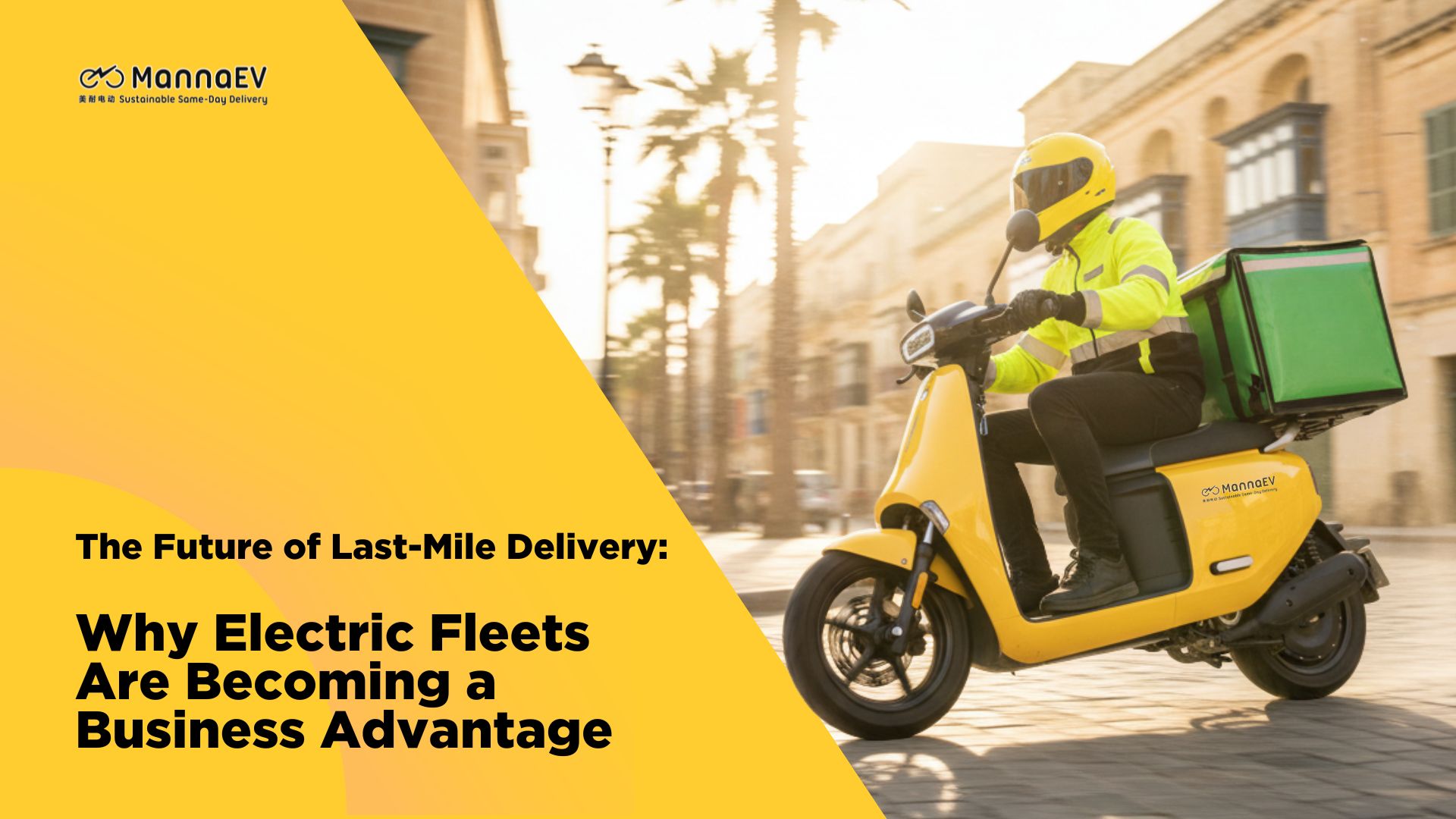
The way goods move through cities is changing.
From food delivery and e-commerce to retail logistics and courier services, last-mile delivery has become one of the most important parts of modern commerce. Customers expect faster delivery, businesses need greater efficiency, and operators are under increasing pressure to control costs while maintaining reliable service.
For many delivery businesses, transportation represents one of the largest operational expenses. Fuel prices, vehicle maintenance, and fleet downtime can directly impact profitability.
This is why more businesses are beginning to rethink their delivery operations.
Electric fleets are no longer only viewed as a sustainability initiative. They are becoming a strategic business advantage.

The Growing Pressure on Traditional Delivery Fleets
Traditional delivery fleets have supported urban logistics for decades, but they are facing increasing challenges.
Fuel costs remain unpredictable, maintenance expenses continue to add operational pressure, and vehicles operating in dense urban environments often face efficiency limitations.
For businesses managing multiple delivery vehicles, these costs quickly accumulate.
A single vehicle may only require small daily expenses, but across a larger fleet, fuel consumption, servicing, repairs, and downtime can significantly affect overall performance.
Beyond financial considerations, cities are also introducing stricter environmental regulations and cleaner transportation policies. Businesses operating in urban areas will increasingly need solutions that align with changing mobility requirements.
The challenge is clear:
Delivery businesses need vehicles that are not only reliable, but also more efficient and future-ready.
Why Electric Fleets Make Business Sense
The transition to electric vehicles is often associated with sustainability, but the business benefits go beyond environmental impact.
For delivery operations, electric fleets can provide several operational advantages.
Lower Operating Costs
One of the biggest advantages of electric vehicles is the potential reduction in daily operating expenses.
Electric vehicles typically have lower energy costs compared to traditional fuel-powered vehicles. For businesses with high vehicle utilisation, these savings can become significant over time.
When multiplied across an entire fleet, improved energy efficiency can contribute to better cost control and stronger business performance.
Reduced Maintenance Requirements
Electric vehicles have fewer moving mechanical components compared to internal combustion engine vehicles.
This can result in reduced maintenance complexity and fewer service requirements, helping businesses minimise vehicle downtime.
For delivery operators, uptime is critical.
A vehicle that is unavailable cannot complete deliveries, generate revenue, or support customer satisfaction.
By improving reliability, electric fleets help businesses keep operations running smoothly.
Better Fleet Efficiency
Modern electric mobility solutions are becoming increasingly connected.
Through digital tools and fleet management technology, businesses can gain better visibility into vehicle performance, usage patterns, and operational efficiency.
This allows operators to make smarter decisions about:
- Vehicle utilisation
- Route planning
- Maintenance scheduling
- Energy management
Instead of simply managing vehicles, businesses can optimise an entire delivery ecosystem.
Electric Fleets and the Future of Urban Delivery
The future of delivery is moving toward smarter, cleaner, and more efficient transportation models.
As cities become more crowded and customer expectations continue to rise, businesses need solutions that can support faster and more sustainable delivery operations.
Electric vehicles are particularly suitable for last-mile delivery because many delivery routes involve frequent stops, shorter distances, and high daily usage.
These conditions allow businesses to maximise the benefits of electric mobility while reducing operational costs.
From restaurants and retailers to logistics companies and courier services, electric fleets provide an opportunity to modernise delivery operations and prepare for the future of urban mobility.

More Than Vehicles: Building a Smarter Delivery Ecosystem
Successful electrification is not only about replacing traditional vehicles with electric alternatives.
Businesses also need the right ecosystem to support their transition.
This includes reliable charging or battery solutions, fleet management tools, maintenance support, and flexible adoption models that make electrification practical.
At MannaEV, we believe the future of delivery depends on creating mobility solutions that help businesses operate more efficiently while making the transition to electric simple and accessible.
By combining electric vehicles with the right infrastructure and support, businesses can move beyond simply reducing emissions.
They can build delivery operations that are more reliable, cost-effective, and ready for the future.
The Future of Delivery Is Electric
The shift toward electric delivery fleets is not just a change in vehicle technology.
It represents a new approach to how businesses manage transportation.
Companies that embrace electric mobility today can gain a competitive advantage through improved efficiency, better cost management, and more sustainable operations.
As the delivery industry continues to evolve, the businesses that adapt early will be better positioned to succeed in the future of mobility.
Ready to Electrify Your Delivery Operations?
Whether you are a business looking to optimise your delivery fleet, a rider seeking a smarter mobility solution, or a partner interested in the future of electric transportation, MannaEV is ready to support your journey.
🚦 Ready to Join the Movement?
Let’s build a cleaner, smarter, and more efficient future for delivery together.
📱 WhatsApp: +356 7962 4080
📧 Email: support@mannaev.com
🌐 Learn more: www.mannaev.com
Let’s Electrify. Empower. Elevate. Together.
Leave a Reply